Real Estate CRM: Features Dubai Agencies Actually Need
Real estate in Dubai moves fast. A single listing can bring enquiries from property portals, WhatsApp, Instagram, the website and walk-ins within hours, and the agent who replies first usually wins the viewing. Spreadsheets and personal phones cannot keep up, and when an agent leaves, their leads often leave with them. A real estate CRM in Dubai gives the agency one place for every lead, listing, viewing and deal. This guide covers the features that matter most and when a custom CRM is worth it.
1. Every lead in one inbox
Leads arrive from many channels. The CRM should capture them automatically where possible, from website forms and portal email notifications, and make it quick to add WhatsApp and phone enquiries by hand. Each lead should show its source, so the agency knows which portals and campaigns actually bring buyers and tenants.
2. Fast assignment and response tracking
Speed matters. The CRM should assign new leads to agents by area, project, language or rotation, and alert them immediately. Managers should see how long each agent takes to respond and which leads have not been contacted at all.
3. Buyer and tenant requirements
A good lead record holds more than a name and number: budget, area, property type, bedrooms, ready or off-plan, cash or mortgage, and move-in date. With this information the CRM can match leads to listings and remind agents to share new properties that fit.
4. Listings linked to owners and deals
Listings should live in the same system as leads, with photos, price history, availability and the owner's or developer's details. When a listing changes, agents can see which leads have already viewed it or might be interested.
5. Viewings and follow-ups
Viewings are where deals are won or lost. The CRM should schedule viewings on a shared calendar, send reminders to the client and agent by WhatsApp or SMS, and prompt the agent to record feedback afterwards. Follow-up tasks should appear automatically, so no interested client is forgotten.
6. Pipeline from enquiry to handover
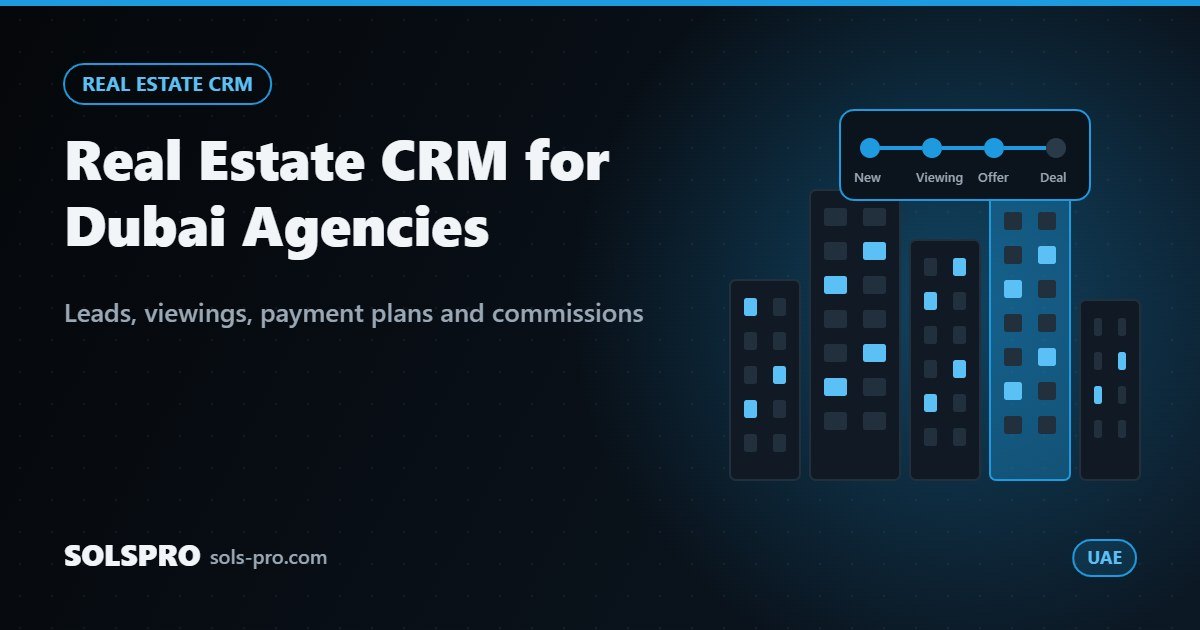
Every deal should move through clear stages, for example new, contacted, viewing, offer, agreement, payment and handover. A visual pipeline shows managers where deals are stuck and what revenue is likely this month.
7. Off-plan payment plans
Off-plan sales are a large part of the Dubai market, and they come with payment plans spread over months or years. A CRM that records each installment, due date and amount paid helps agencies follow up on payments and keep buyers informed, instead of tracking schedules in separate spreadsheets.
8. Documents in one place
Each deal collects documents: identification copies, contracts, receipts and forms. Storing them against the client and deal, with access limited by role, keeps them organised and avoids sensitive files sitting in personal phones and email inboxes.
9. Agent commissions and targets
Commissions are often split between agents, teams and referrers. The CRM should calculate each agent's share from closed deals, track what has been paid, and show performance against targets. This removes month-end disputes and saves hours of manual calculation.
10. Arabic and English, desktop and mobile
Agents work in the field, so the CRM must be quick on a phone. Client-facing messages and documents may be needed in Arabic and English. A bilingual interface with proper right-to-left layout helps agencies serve local and international clients alike.
11. Owner and manager dashboards
Owners need a clear view: new leads by source, viewings this week, deals in each stage, expected commission, payments due and top agents. A dashboard that answers these in one screen is often what turns a CRM from a chore into a tool people rely on.
Ready-made or custom real estate CRM?
Ready-made property CRMs are a good start for small agencies with a standard process. A custom CRM makes sense when you handle off-plan payment plans, have complex commission rules, run several brands or branches, want your own reports, or want to own your data and avoid per-user fees that grow with your team. It can also connect to a mobile app for agents or to your website so listings stay in sync.
If you are comparing options, our guide to custom CRM versus off-the-shelf software explains the trade-offs in more detail.
Working with SOLSPRO
SOLSPRO builds custom CRMs, dashboards and apps for businesses in Dubai and across the UAE. Our team works from Karachi, one hour ahead of the UAE, so our working day matches yours. We also work white-label for UAE agencies that sell software to their own clients. Tell us how your agency works today or WhatsApp +92 324 2372699, and we will suggest a plan.
Frequently asked questions
Can a CRM pull leads from property portals automatically?
Often yes, through the portal's integration options or by reading lead notification emails. The right approach depends on which portals you use and what access they provide.
Can agents use the CRM on their phones?
Yes. A responsive CRM works in the phone browser, and a dedicated mobile app can be added for faster updates during viewings.
How do we move our existing leads into a new CRM?
Leads, listings and contacts can usually be exported from spreadsheets or your current tool, cleaned and imported before launch.